
What Does a Demonstrating Medium Actually Need to Learn? How to Become a Demonstrating Medium
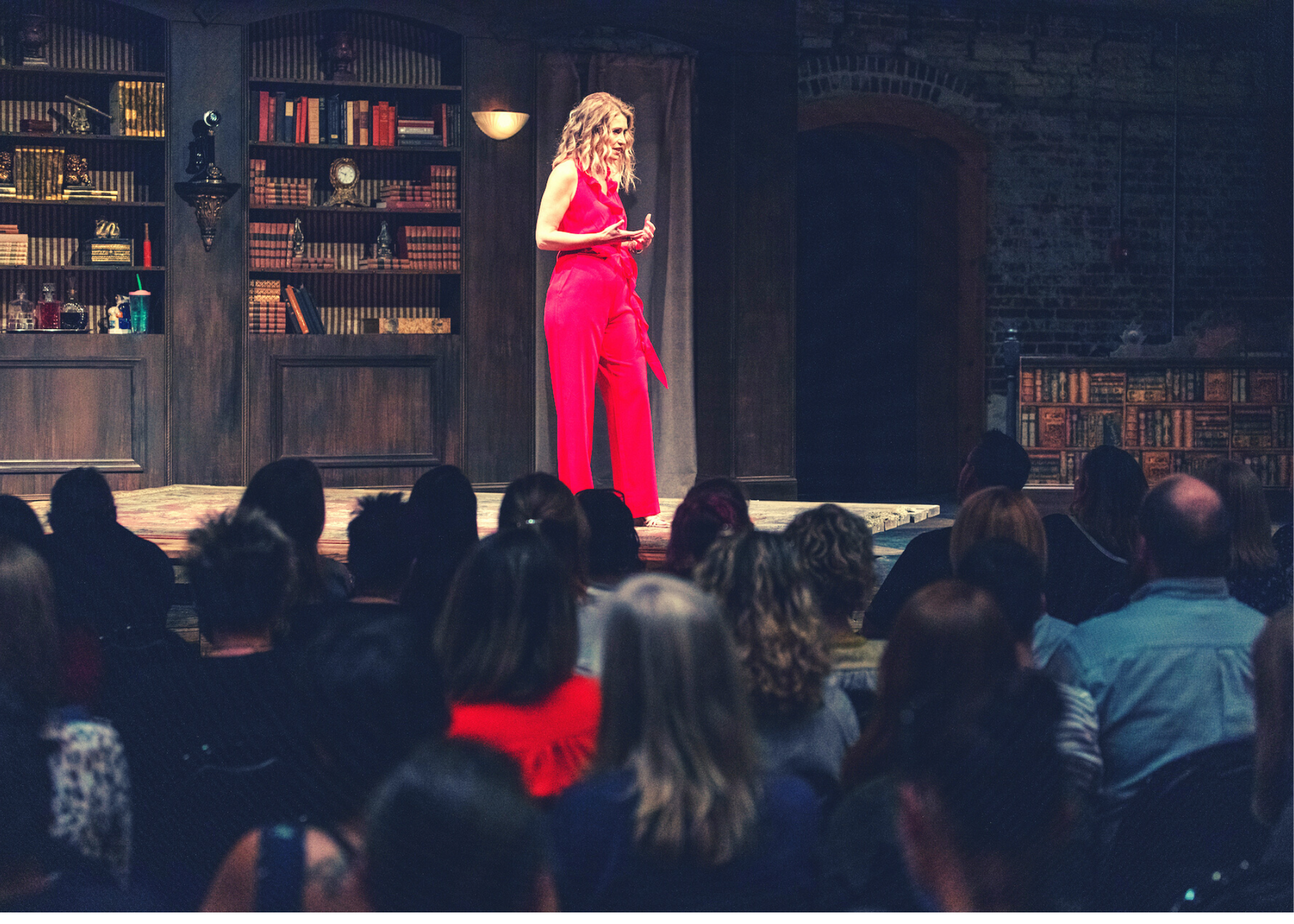
Carol Demonstrating: The Wolfe Street Theatre
Demonstrating Mediumship, whether in person or online, requires a different set of skills than one-to-one readings. Whether you want to focus on small groups or large audiences, platform mediumship skill development is an investment in yourself - and your work as a medium.
If you are already an experienced medium, you may assume that becoming a demonstrating medium simply means taking the mediumship you already do and doing it in front of an audience. But, in reality, demonstrating mediumship requires a different set of skills.
You may feel confident giving one-to-one readings, understand blending and evidence, and have years of experience working with sitters—and still feel nervous, exposed, or unsure when you are standing in front of a group. Don’t worry; that’s normal.
So, what does a demonstrating medium actually need to learn?
The answer isn't about becoming a completely different kind of medium. It is about learning how to bring the foundation you already have into a public setting with confidence, professionalism, poise, and authenticity.
1. Confidence in Front of an Audience
One of the biggest challenges for an experienced medium moving toward demonstration is simply being watched.
A one-to-one reading can feel intimate and focused. You are working with one person, in a relatively contained environment.
A demonstration is different.
There may be a handful, dozens—or even hundreds—of people watching you. You are aware of the audience, the time, the platform, the way you are presenting yourself, and the fact that your mediumship is happening publicly.
It is completely understandable for this to bring up nerves.
You may wonder:
What if I get something wrong?
What if I can't make a connection?
What if everyone is watching me?
What if I lose my confidence?
What if I freeze on stage?
How do I keep going when I'm nervous?
Learning to become a demonstrating medium isn't about never feeling nervous. It is about learning how to work with those nerves so they don't take over your demonstration.
Confidence develops through experience.
It comes from having opportunities to practice, receive real-time feedback, understand what is working, make adjustments, and try again.
2. Learning How to Pace a Demonstration
Pacing is another important skill that can be quite different from a one-to-one reading.
In a private reading, you may have more time to explore a connection. A demonstration has a different rhythm.
You need to be aware of the audience, the available time, the flow of the demonstration, and the communication you are giving.
You are learning when to move forward, when to stay with something, and when you have enough evidence to allow the connection to develop.
Good pacing doesn't mean rushing. It means becoming aware of the rhythm of your demonstration and learning how to work within it.
This is one of those skills that becomes much easier when you have someone experienced observing you and offering feedback in real time.
3. Developing Your Presence and Professionalism
Demonstrating mediumship isn't only about the evidence you bring through. It is also about how you show up.
Your presence, communication, poise, professionalism, and relationship with the audience all become part of the demonstration.
This doesn't mean creating a performance or pretending to be someone you're not.
In fact, the opposite is true.
The goal is to become comfortable enough in the demonstration environment that you can relax into your own authentic style.
You don't need to copy another demonstrating medium. You need to discover what works for you.
That includes learning how you naturally communicate, how you hold yourself in front of a group, how you respond when something unexpected happens, and how you maintain professionalism while remaining genuine and approachable.
4. Learning How to Transition From One-to-One Readings to Demonstration
If you're wondering how to transition from one-to-one readings to demonstrating mediumship, one of the most important things to understand is that you already have something valuable.
Your experience matters. You aren't starting from the beginning. You already understand your mediumship, blending, evidence, and the experience of working with a sitter.
The next step is learning how to adapt those skills to a different environment.
That might mean becoming more aware of your audience.
It might mean learning how to communicate more clearly and concisely.
It might mean developing your pacing or becoming more comfortable with the physical and emotional experience of being on a platform.
And it almost certainly means practice.
You can read about demonstrating mediumship. You can watch demonstrations. You can take an online course. But there is something different about actually demonstrating while an experienced mentor is watching, assessing, and giving you feedback.
That is where development happens.
5. Finding Your Authentic Voice
Perhaps the most important thing a demonstrating medium needs to learn is how to be themselves.
It can be tempting to watch experienced demonstrators and think: "That's how I should do it."
But your demonstration doesn't need to look or sound like someone else's. Your personality, communication style, presence, and way of working are part of what makes your demonstration uniquely yours.
The goal isn't perfection. The goal is authenticity.
When you have enough experience and confidence to stop worrying about whether you're doing it "right," you can begin to discover what it means to demonstrate in a way that feels natural to you.
That is where confidence and authenticity begin to work together.
Becoming a Demonstrating Medium Takes More Than Knowledge
If you already have a foundation in evidential mediumship, the next stage isn't necessarily about learning more information.
It may be about learning how to use what you already know in a new environment.
You need opportunities to practice.
You need honest and constructive feedback.
You need space to make mistakes without feeling judged.
And you need someone who understands the difference between giving a reading and demonstrating in front of an audience.
That's why mentorship can be so valuable at this stage.
The Art of the Demonstrating Medium Mentorship
The Art of the Demonstrating Medium Mentorship is designed for experienced mediums who are ready to explore platform or group demonstration.
This is not a beginner program or a self-paced online course.
It is a face-to-face mentorship built around coached practice, conversation, observation, and real-time feedback. You have opportunities to demonstrate in both in-person and online environments, with an experienced demonstrating medium and mentor to assess, assist, encourage, and support your development.
The focus is on helping you develop:
Confidence
Professionalism
Poise
Pacing
Audience awareness
Authenticity
Your own voice as a demonstrating medium
Most importantly, you don't have to figure it out alone.
If you already have the foundation and feel ready to take your mediumship into demonstration, The Art of the Demonstrating Medium Mentorship can help you take that next step with greater confidence and authenticity.
Learn more about The Art of the Demonstrating Medium Mentorship and discover whether it is the right next step for you. The next mentorship group begins November 6, 2027
carolcottrell.com/mediumship-demonstration-mentorship
Frequently Asked Questions
Do I need to be an experienced medium to become a demonstrating medium?
Yes. This mentorship is designed for mediums who already have consistent experience giving evidential one-to-one readings and have a solid foundation in blending and evidence. It is not intended for beginners.
Is demonstrating mediumship different from giving one-to-one readings?
Yes. Although your existing mediumship foundation remains important, demonstrating introduces additional skills such as audience awareness, pacing, presentation, professionalism, and working confidently in a group environment.
What if I am confident in readings but nervous in front of an audience?
That is very common. Being comfortable in a one-to-one reading doesn't automatically mean you will feel comfortable demonstrating publicly. Confidence can be developed through supported practice, feedback, and experience.
Can I learn demonstrating mediumship through an online course?
You can learn concepts and information through courses, but demonstration itself is a practical skill. Having opportunities to demonstrate while an experienced mentor observes and gives you real-time feedback provides a different kind of learning experience.
How do I know if I am ready for mentorship?
If you have experience giving evidential one-to-one readings, understand the foundations of blending and evidence, and feel called to explore platform or group demonstration, you may be ready to take this next step.